Unlatching the roll of film from my Yashicaflex, I’m more excited than ever to develop a roll. I’m crazy about the mechanics of this camera—everything is simple, yet complex. From the way the roll travels from one side of the camera, around the bend, to the other; to the solid, reassuring twist latch that seals the film door shut; to the counter window at the back that allows me to count each frame from the numbers on the film’s backing sheet while I wind the roll forward with the satisfyingly haptic film-advance knob—every part of this camera pleases my primitive, tactile brain. As I prepare to unravel the backing sheet of what must be one of my favourite cameras, I can barely contain the excitement of my early-century ancestors.
As I’m moving interstate in a few months, I don’t want to set up a darkroom in the house, nor do I own a dark tent. Instead, I drape a block-out curtain over myself and fumble around in pitch black on the floor of my study, trying to guide the film onto the development reel. Loading 35mm has never given me trouble, but this is my first time handling 120 film, and now, coming out from under the curtain, it proved to be a far more involved process.
I spent about twenty minutes under the curtain, trying to meditate past my claustrophobia as I struggled to guide the film onto the reel. Once it finally latched, I slipped the reel into the light-tight development tank and let out an exhausted sigh of relief. Someone shared a trick with me for doing this more easily, so I’ll have to try it with my next roll.
Making my way into the spare bathroom where I process my film, I begin setting up my processing station. Before long, I discover I do not have enough developer for a 120 roll. I had enough left from the Ilford Paterson processing kit for a roll of 35mm, though I did not think to check if I had much more left over. After some deliberation, weighing up the choice between over-diluting the chemicals and waiting a week for new ones to arrive, I decide to risk losing part of the roll so I can finish this test over the weekend. I can justify my impatience by remembering that most of the shots on this roll are of bins and fire-exhaust boxes anyway.
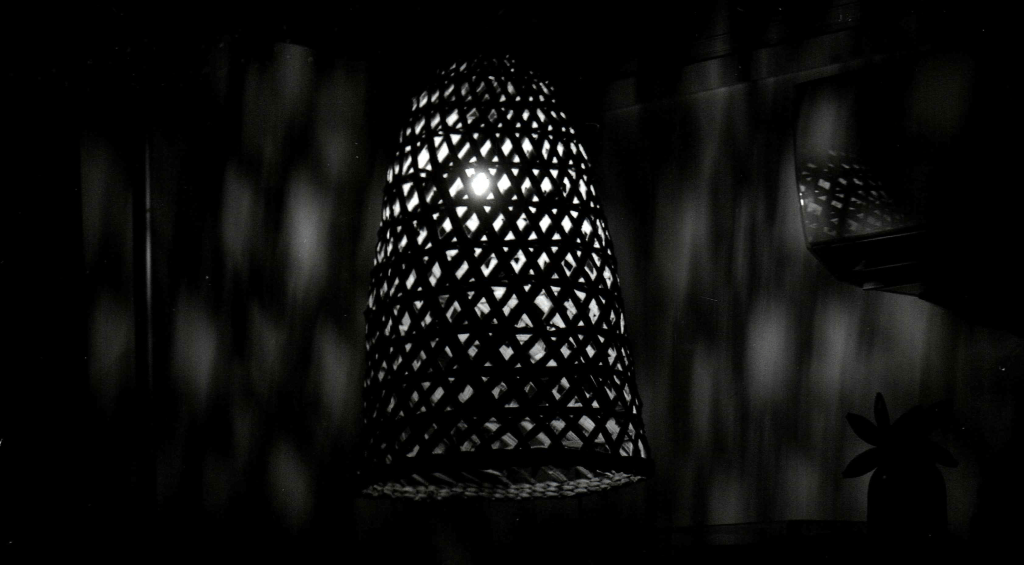
So, I got to developing, and despite the undeveloped edge of the negatives, the photos turned out a lot better than expected. They were of high quality for the speed of the film I used, and the contrast between light and dark was absolutely stunning—I just can’t get that sort of contrast with my Minolta. There were a few over- and underexposures here and there—from miscalculating the stop counts to account for the inherent overexposure caused by the incompatible film speed—and my difficulty focusing in low light through the viewfinder showed in the photographs, but apart from that, I was happy with how the roll turned out.
This will definitely be the camera I use for my best shots, though I favour my Minolta as my everyday camera, since shooting on the Yashicaflex gets expensive quickly, and with the reverse viewfinder image, it can be a little slow to compose a shot. I also don’t have a digital camera apart from my phone, so the Minolta is useful for test shots and general use.
I’ve stocked up properly on chemicals now, and I’ll make sure to keep a healthy supply from here on. They should arrive before my next roll is finished. Before that happens, though, I need to load the camera with the right film this time.
Loading the film in and rolling it back is still the absolute most satisfying feeling. There is something wonderfully tactile about the moment it hooks onto the spool and you wind it forward, letting the backing paper sit perfectly tight against the roll. Then, as you wind the film forward until the number appears in the counter window, you do so carefully, lest you roll past the number and risk overlapping exposures.
